

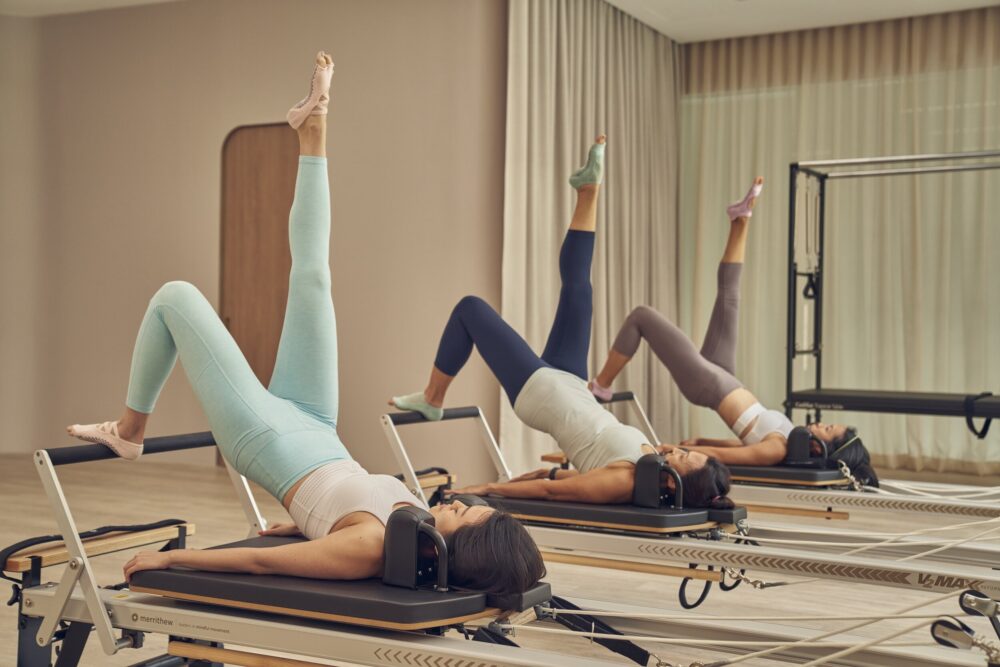
Posture concerns are common among people who spend much of the working day at a laptop. Rounded shoulders, a forward head position and stiffness through the hips are often blamed on sitting, but the solution is rarely as simple as stretching one tight area. People considering pilates singapore should understand that Pilates can improve movement awareness, muscular endurance and positional options, but it cannot create one permanently perfect posture.
The more useful goal is adaptability. A body that can comfortably change positions, tolerate daily tasks and respond to physical demands is generally better served than one trying to hold an idealised shape for eight hours.
The Problem Is Often Lack of Variation
Sitting is not automatically harmful. The difficulty arises when someone remains in the same position for long periods without changing load or direction.
Even an ergonomically arranged desk can become uncomfortable when the body is kept still. Muscles that support the trunk may fatigue, the upper back may become less mobile and the hips may remain in a shortened position for hours. Mental concentration can also reduce awareness of tension in the jaw, neck and shoulders.
This means posture should be considered a behaviour that changes throughout the day, not a fixed structure that needs to be corrected once.
What Pilates Can Realistically Improve
Pilates can influence several factors associated with desk-related discomfort and fatigue.
Positional Awareness
Many people do not notice when their ribs lift, shoulders tense or pelvis shifts while moving. Pilates uses controlled exercises and clear instructions to help participants recognise these patterns.
Awareness does not require constant self-correction. Its practical value is that someone can detect mounting tension earlier and change position before discomfort escalates.
Trunk Endurance
The trunk does not need to remain rigid during desk work. However, sufficient endurance can help a person sit, stand and move without relying heavily on one area.
Pilates exercises often coordinate the abdominal wall, back muscles, diaphragm and pelvic floor. This can improve the ability to manage low-level postural demands without excessive bracing.
Thoracic Movement
Laptop work may involve prolonged flexion through the upper back. Pilates can introduce extension, rotation and side bending in a controlled setting.
Restoring movement options may make reaching, turning and standing feel less restricted. It can also reduce the tendency to force movement through the neck or lower back when the thoracic spine is not contributing effectively.
Hip and Shoulder Control
Desk work does not only affect the spine. Long periods of sitting can make hip extension feel unfamiliar, while keyboard use may keep the shoulders in a narrow range.
Pilates can train the hips and shoulders through varied positions. The objective is not merely to stretch them, but to control the available range.
What Pilates Cannot Promise
Pilates marketing sometimes overstates what exercise can accomplish. It is important to separate plausible benefits from unrealistic claims.
Pilates cannot permanently hold the spine in an ideal position. The body will continue to change shape according to the task, energy level and environment. Nor can one class cancel out an entire week of uninterrupted sitting.
It also cannot guarantee that every case of neck or back pain will disappear. Pain may involve sleep, stress, previous injury, workload, medical conditions and psychological factors. Exercise can be helpful, but persistent or worsening symptoms should be assessed appropriately.
Pilates is also unlikely to change fixed structural characteristics such as bone shape. It may change how a person organises movement around those characteristics, but it does not remodel every anatomical variation.
Avoid Turning Posture Into Constant Bracing
A common response to posture advice is to pull the shoulders back, lift the chest and tighten the abdominal muscles all day. This can replace one uncomfortable position with another.
Good postural control includes the ability to relax. The ribs should be able to move during breathing, the shoulders should move with the arms and the pelvis should adjust when someone reaches or changes direction.
Pilates instruction can help people differentiate active support from unnecessary tension. If someone finishes every exercise with a clenched jaw and rigid abdomen, the strategy may need refinement.
A Practical Desk-to-Studio Routine
Pilates works best when combined with small changes during the working day. These changes do not require a complicated workplace programme.
Every 30 to 60 minutes, choose one action:
- Stand while taking a short call.
- Walk to refill water.
- Rotate gently through the upper back.
- Change the chair position.
- Place one foot forward for several minutes.
- Move the screen or keyboard slightly to alter the task.
- Take several slower breaths without forcing the chest upward.
The aim is variation, not perfect execution.
A Pilates class can then provide more structured work. Someone with desk-related stiffness might focus on thoracic rotation, controlled spinal articulation, hip extension, shoulder-blade movement and trunk endurance.
The instructor should know whether a position causes symptoms. An exercise can often be adjusted by reducing range, changing support or selecting a different variation.
Assessing Whether the Approach Is Working
Posture photographs are not always the best measure of progress. A more meaningful review considers function and tolerance.
Useful questions include:
- Can you work longer before discomfort begins?
- Do you notice tension early enough to change position?
- Is it easier to rotate, reach or stand after sitting?
- Can you breathe comfortably during trunk exercises?
- Are you using less force to hold yourself upright?
- Do symptoms settle more quickly after movement?
These changes may occur even if a side-view photograph looks similar.
Build More Movement Options, Not a Perfect Pose
A sustainable posture strategy combines workspace adjustments, movement breaks, sufficient sleep, strength work and regular exercise. Pilates can contribute by teaching controlled movement and helping participants explore positions they may not use during the working day.
At Yoga Edition, participants can use Pilates classes as a structured opportunity to work on trunk control, mobility and body awareness. The most helpful approach is to share relevant discomfort or limitations with the instructor instead of attempting to force a textbook position.
After long desk hours, the body usually needs choices rather than correction. Pilates cannot make anyone immune to the effects of inactivity, but it can expand the range of positions they can access and control. Combined with regular movement throughout the day, that adaptability is more practical than trying to maintain one supposedly perfect posture.
